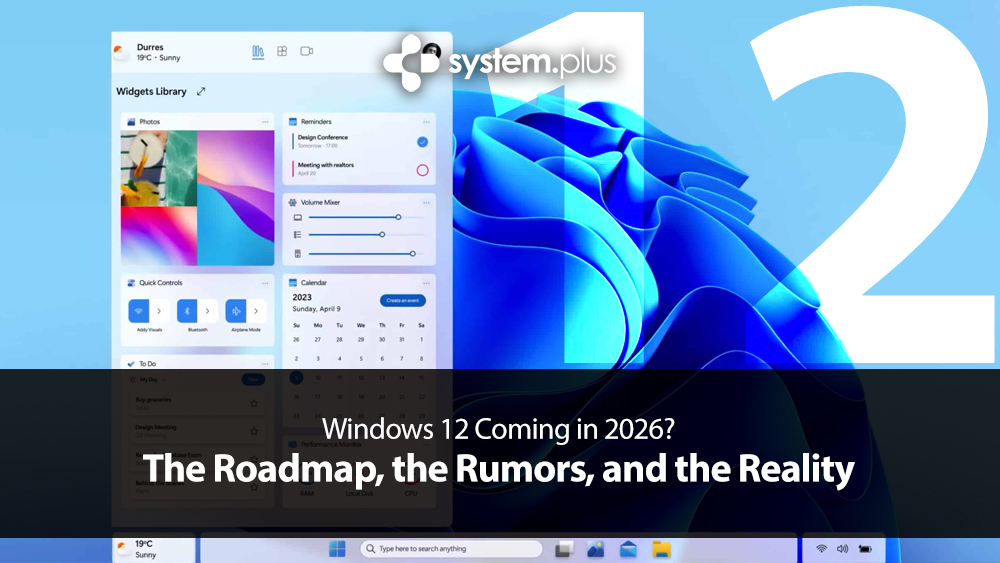
Windows 12 Coming in 2026? The Roadmap, the Rumors, and the Reality

Windows 12 in 2026? Why the Internet Is Wrong (And What’s Actually Coming)

If you’ve spent any time on tech forums or scrolling through your feeds lately, you’ve likely seen the headline: “Windows 12 Launching in 2026!” It’s a compelling story, the idea of a fresh, AI-native operating system designed to drag us into the next era of computing. It sounds like the perfect answer to the complaints currently plaguing Windows 11.
But here at System Plus, we like to cut through the noise. As of March 2026, the data is in, and the verdict is clear: Windows 12 is not coming this year. In fact, the rumors you’re seeing are largely the result of a “hallucination loop” a mix of old, abandoned project codenames and AI-generated speculation that has snowballed into a viral myth. Here is the reality behind Microsoft’s actual 2026 roadmap and what you should really expect for your desktop this year.
The Anatomy of a Myth: Why “Windows 12” Went Viral
It started with a series of reports claiming Microsoft was prepping a modular “CorePC” architecture, a subscription-based AI OS, and a hard requirement for 40+ TOPS NPUs.
These reports were almost entirely debunked by internal industry sources earlier this week. The “leaks” were actually misidentified references to “CorePC” and “Hudson Valley,” projects that date back to 2023 and have either been scrapped or folded into existing Windows 11 architecture.
Why did they stick? Because they tapped into what users want. We are tired of the bloat. We are tired of the inconsistent UI. We are tired of the feeling that Windows 11 is an experiment rather than a finished product. When a rumor promises a “fresh start” (Windows 12), the internet is naturally going to amplify it. But in the halls of Redmond, the strategy is much more conservative: Fixing the foundation is the only priority.
The Real 2026 Roadmap: The “Refinement” Era
Microsoft isn’t interested in fragmenting its user base with a brand-new OS release while the world is still reeling from the Windows 10 “End of Life” transition. Instead, they are sticking to their annual cadence, split into two very distinct, very different tracks.
1. The 26H1 Platform Release (The Silent Update)
If you are buying a brand-new PC this spring, you might see “26H1” in the system settings. Do not mistake this for a consumer feature update. This is a targeted platform release designed primarily for new hardware, specifically the next generation of Arm-based silicon (like the Qualcomm Snapdragon X2).
It is an engineering release, not a “new Windows.” Its goal is to optimize power efficiency and NPU (Neural Processing Unit) offloading for new mobile chips. If you are on an Intel or AMD desktop, this doesn’t apply to you, and frankly, you aren’t missing out on any “new features.”
2. The 26H2 Consumer Update (The “Fix-It” Release)
This is what most of you should care about. Scheduled for the fall of 2026, Windows 11 26H2 is currently in development with a specific goal: rehabilitating the Windows 11 reputation.
Microsoft’s leadership has acknowledged that the “AI Everywhere” strategy was a misfire. The push to put Copilot in every crevice of the OS, from Notepad to Paint, has been met with, let’s be frank, annoyance. Here is what to expect in 26H2:
- The “Un-Bloating”: Expect a retreat from forced AI integrations. We are hearing reports of teams working to make features like Copilot optional, not intrusive.
- The Return of Customization: After years of requests, Microsoft is finally listening regarding UI flexibility. The “movable taskbar” is being actively developed, alongside other quality-of-life adjustments that make the desktop feel like a tool again, not a billboard.
- Performance Optimization: The focus for 26H2 is “under-the-hood” reliability. They are targeting the frequent system hangs and explorer.exe instability that have become the hallmark of the last few feature updates.
The “NPU” Threshold: A New Hardware Requirement
The biggest technical shift in 2026 isn’t the name of the OS; it’s how it talks to your silicon. For the last decade, we relied on the CPU and GPU. Now, the Neural Processing Unit (NPU) is the star of the show.
Microsoft has internally set a benchmark of 40 TOPS (Trillions of Operations Per Second) for “Premium AI Experiences.” This is why 26H1 is only appearing on new Snapdragon X2 and high-end Intel/AMD chips. If your current PC doesn’t have an NPU, you aren’t being “locked out” of Windows, but you are being locked out of the local, lightning-fast AI features. This effectively creates a two-tier Windows ecosystem, the “Standard” and the “Copilot+.”
The Subscription Fear: Real or Hallucination?
One of the most shared rumors of early 2026 is that Windows 12 will require a monthly fee. Based on current data, this is a misunderstanding.
Microsoft is expanding Windows 365 (a cloud-based OS for businesses), which is subscription-based. However, the core consumer version of Windows is expected to remain a one-time license or a free upgrade for valid Windows 11 users. The “subscription” elements likely refer to premium AI features, think of it as “Copilot Pro” integrated deeper into the shell, rather than paying a monthly fee just to reach your desktop.
Why Microsoft Can’t Afford a New OS Right Now
There is a massive, looming shadow over the Windows ecosystem: Windows 10.
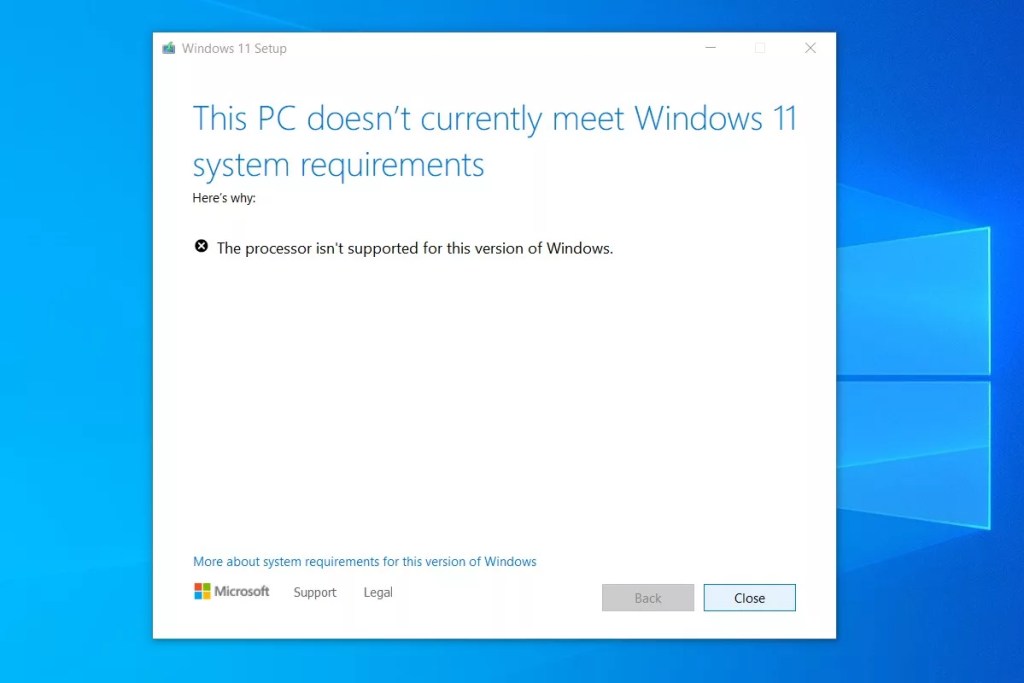
October 2025 marked the official end of free support for Windows 10, but the migration is far from over. Millions of businesses and consumers are still running older hardware that cannot upgrade to Windows 11 due to TPM 2.0 requirements.
Microsoft is currently in a high-stakes “migration tail.” If they launch Windows 12 now, they risk creating a “three-tier” world:
- Windows 10: The legacy, unsupported base.
- Windows 11: The current, contested standard.
- Windows 12: The new, alienating tier.
Fragmenting the market into three camps would be a business disaster. Microsoft needs everyone on Windows 11 to unify the security and ecosystem. They aren’t going to blow that up with a new release just to chase an AI buzzword.
What This Means for System Plus Readers
Don’t wait for “Windows 12” to solve your problems. It isn’t coming to save the day in 2026.
If you are frustrated with your current setup, your best path forward is to optimise what you have:
- Debloat: If you are running 24H2 or 25H2, use this time to clean up your startup apps and disable the AI features you don’t need.
- Check Your Hardware: If you are still on Windows 10, stop hoping for a new OS to provide a “hardware-free” upgrade path. The requirements are here to stay.
- Watch the 26H2 Previews: Keep an eye on the Windows Insider builds this summer. That’s where the real changes for 2026 will appear.
The Bottom Line: 2026 is the year of the “Refinement Update.” It’s a year where Microsoft pivots away from chasing the “shiny new thing” and instead tries to regain the trust they lost by making Windows 11 actually… work well.
Share this:

Discover more from System Plus
Subscribe to get the latest posts sent to your email.