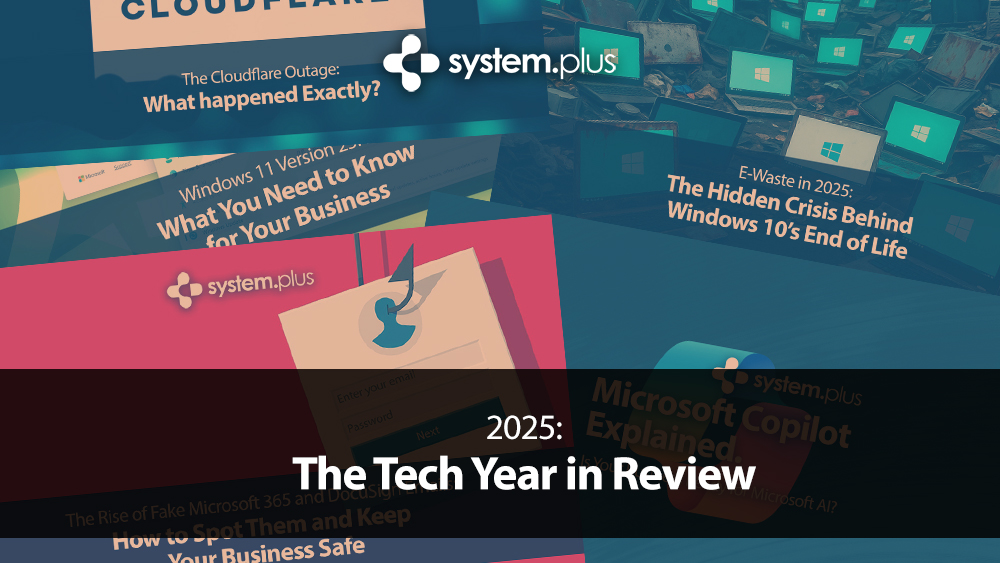
2025: The Tech Year In Review

The definitive look back at the biggest tech trends, news, and stats that shaped the year
If 2024 was the year AI arrived, then 2025 was the year it commandeered the digital world. From massive internet outages to trillion-dollar companies, this was a year of explosive growth, strategic disruption, and stark reminders of just how interconnected our digital lives have become.
Let’s dive in.
AI: Front and Centre of the Tech Universe
Artificial intelligence wasn’t just a buzzword in 2025, it drove the economy, influenced infrastructure plans, and reshaped how companies operate.
The growth in AI brought unprecedented demand for computing power, sparking record data-centre dealmaking with over 100 deals worth nearly $61 billion through November. This surge was fuelled by the need to power AI workloads and build infrastructure to support the next generation of machine learning systems. (Reuters)
At the same time, AI research itself is evolving rapidly. Recent academic studies show that AI systems have begun to outperform entire cybersecurity teams in competitions, signalling how quickly capabilities are advancing. And behind the scenes, supercomputer performance for AI applications has doubled roughly every nine months, a trend that underlines the sheer pace of technological change. (arXiv)
This isn’t future talk. It’s the world today.
The Internet Grew and Got Busier, Messier, and More Fragile
According to annual reports, global internet traffic jumped by nearly 19% in 2025. But here’s the twist: a huge portion of that growth wasn’t people browsing websites, it was bots, especially AI bots. In some metrics, AI bots now account for a significant share of total web traffic. (TechRadar)
This bot-driven traffic boom reflects how the internet itself is being rewired: machine-to-machine activity, crawling, indexing, and AI-driven training data flows increasingly dominate online interactions.
But growth came with pain. High-impact outages, most notably by Cloudflare disrupted major platforms like LinkedIn, Zoom, X, Discord, and even AI services for hours at a time, reminding us how centralised and dependent the web has become on a handful of infrastructure providers. (TechRadar)
Still, progress continued in security infrastructure: post-quantum encryption technologies are now protecting a bigger share of human web activity than ever, gearing up for a future where quantum computers could challenge traditional cryptography. (Quantum Zeitgeist)
Windows 10 Support Ended, Big Impact for Small Businesses Too
October 2025 marked the official end of support for Windows 10. While not a headline-grabbing crisis, this milestone had real implications for businesses reliant on secure systems.
Without ongoing security patches and support updates, organisations running Windows 10 face increased security risk, compliance challenges, and awkward upgrade paths to Windows 11 or newer platforms.
It’s one of those tech deadlines that doesn’t make flashy news but drives budgeting, procurement, and IT planning across millions of devices worldwide.
Who Earned the Most in Tech in 2025?
2025 was also a year defined by wealth and scale. Tech companies dominated global profitability lists, with several earning net incomes well above $100 billion. (Visual Capitalist)
Below is a snapshot of the highest earning and most valuable tech giants, not just in headlines, but by the hard numbers that matter in business.
📊 Tech Powerhouses by Revenue & Value (2025)
| Company | 2025 Estimated Revenue (USD) | Market Value (Approx, 2025) | Notes |
|---|---|---|---|
| Amazon | $637.9 B | ~$2.44 T | Biggest tech revenue globally, driven by cloud and retail. (Wikipedia) |
| Apple | $416.0 B | ~$3.45 T | iPhone growth and services expansion helped revenue and valuation. (Wikipedia) |
| Alphabet (Google) | $350.0 B | ~$2.58 T | Strong ad revenue and search scale. (Wikipedia) |
| Microsoft | $281.7 B | ~$3.76 T+ | Cloud and AI services pushed MSFT into the $4T club mid-year. (Investopedia) |
| Samsung Electronics | $220.3 B | N/A | Leading hardware and memory producer. (Wikipedia) |
| Meta | $164.5 B | ~$1.85 T | Social platforms + AI investments. (Wikipedia) |
(Revenue and market valuations are approximate estimates drawn from public financial data and market cap rankings.)
In terms of market cap, Nvidia, Microsoft, Apple, and Alphabet occupied the highest-value spots, with Nvidia and Microsoft joining the exclusive $4 trillion+ club mid-year, a stunning milestone. (Global Finance Magazine)
Behind them, all major tech industries, from semiconductors to cloud computing saw investors placing massive bets on future AI-driven growth.
Other Big Trends of 2025
🚀 AI Training Data Boom
A whole new economy emerged around supplying high-quality datasets to train AI models, with specialised companies scaling to billions in valuation. (The Verge)
📈 M&A Activity in Tech Shifts
Though acquisition volume declined compared to earlier years, strategic buyouts in cybersecurity, AI tooling, and enterprise automation made 2025 a year of targeted consolidation. (Kiplinger)
🌍 Internet Traffic Patterns Changed
AI and bot traffic reshaped how businesses think about digital reach and infrastructure load, driving new strategies for optimisation and security. (The Cloudflare Blog)
Hardware Had Its Own Big Year
While AI software grabbed the headlines, hardware quietly did the heavy lifting in 2025.
Demand for AI-capable infrastructure pushed GPUs, servers, and storage into short supply yet again. NVIDIA remained the undisputed king of AI acceleration hardware, with its data-centre GPUs effectively becoming the new “oil” of the digital economy. Entire data centres were designed around Nvidia stacks, not the other way round.
Traditional CPUs didn’t disappear, but the balance shifted. AI workloads increasingly ran on specialised silicon, and many businesses found themselves planning hardware refreshes earlier than expected just to stay compatible with modern software stacks.
At the same time, laptop and desktop refresh cycles sped up due to Windows 10 End of Life. Businesses that had “made do” for years were suddenly forced into decisions around replacement, compatibility, and future-proofing, especially where Windows 11 hardware requirements caught people off guard.
China, Chips, and the Ongoing Tech Cold War
2025 also reinforced that technology is now geopolitics.
China continued investing heavily in domestic semiconductor production as export controls and trade restrictions limited access to Western chip manufacturing technologies. In response, Chinese firms accelerated the development of home-grown processors, operating systems, and cloud platforms.
This created a growing tech split between East and West. Software, hardware, and cloud ecosystems increasingly diverged, with global companies having to consider compliance, sourcing, and long-term risk when operating internationally.
For businesses watching from the UK and Europe, this mostly played out in pricing, availability, and supply-chain uncertainty, but the long-term implications are bigger. Where your hardware is made, what firmware it runs, and who controls the supply chain are no longer abstract concerns.
Why AI Made RAM More Valuable Than CPUs
Traditionally, CPUs were the star of the show. In 2025, memory became the bottleneck.
AI systems don’t just need fast processors, they need vast amounts of memory to feed them. Training and running large AI models consumes huge pools of RAM, often far more than traditional business workloads ever required.
In practical terms:
- AI servers regularly shipped with hundreds of gigabytes, or even terabytes, of RAM
- Memory bandwidth became as important as raw capacity
- Data centres competed directly with PC and laptop manufacturers for supply
This competition distorted the market. Even though consumer demand hadn’t exploded, prices still climbed because enterprise buyers were willing to pay more.
The Return of “On-Prem” (Sort Of)
Interestingly, 2025 also saw a quiet return of on-premise thinking.
After years of cloud-only enthusiasm, some organisations began rebalancing. Not abandoning the cloud, but becoming more selective. Rising cloud costs, outage risk, and data-sovereignty concerns pushed some workloads back onto local servers, hybrid environments, or private clouds.
This wasn’t a step backwards, it was a maturing of strategy. Businesses started asking where their data should live, not just if it should be in the cloud.
2025 by the Numbers: The Shareable Stuff
This is the section people love, quick facts that put the year into perspective.
☕ Tech & Internet Stats
- Global internet traffic grew by roughly 20% year-on-year
- Over 50% of all web traffic was automated (bots, crawlers, AI agents)
- The average global business experienced at least one cloud outage impacting productivity
- AI-generated content accounted for a significant share of new online text, images, and video
💻 Hardware & Devices
- AI-optimised servers cost 2–3× more than traditional server builds
- GPU demand outpaced supply for much of the year
- Millions of PCs were replaced early due to Windows 10 End of Life
- Laptop refresh cycles shortened from ~6 years to closer to 4 years in many businesses
🔐 Security
- AI-driven cyberattacks increased both in scale and sophistication
- Terabit-scale DDoS attacks became “normal”, not exceptional
- Post-quantum encryption adoption expanded rapidly among major platforms
- Phishing and fake invoice emails remained one of the most effective attack methods
🤖 AI & Automation
- AI tools were embedded into office software, browsers, and operating systems by default
- Many companies reported productivity gains, but also confusion around AI accuracy and trust
- Human oversight became a major talking point as AI hallucinations made headlines
- Businesses began hiring specifically for “AI operations” and governance roles
💰 Money & Markets
- Multiple tech companies crossed $1 trillion+ valuations
- The gap between tech giants and the rest of the market widened
- AI infrastructure investment reached historic highs
- Individual tech founders and executives saw record-breaking personal wealth
Why 2025 Will Be Looked Back On Differently
Years from now, 2025 will likely be remembered as the year technology stopped being optional context and became unavoidable reality.
AI stopped being a novelty. Cloud stopped feeling invincible. Hardware stopped being boring. Software stopped being something you “owned”. And businesses, finally, had to confront how dependent they were on systems they didn’t fully control.
For many, it was uncomfortable. For others, it was an opportunity.
Either way, 2025 didn’t whisper change, it made it impossible to ignore.
Share this:

Discover more from System Plus
Subscribe to get the latest posts sent to your email.