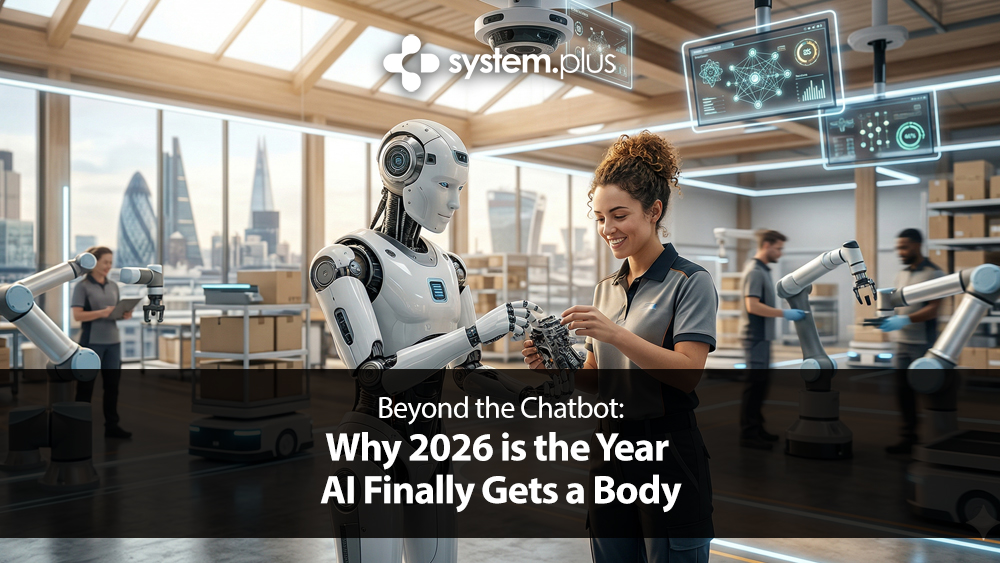
Beyond the Chatbot: Why 2026 is the Year AI Finally Gets a Body

Remember 2023? It was the year we all fell in love, or at least became obsessed with text boxes. We spent hours asking AI to write emails, summarise meetings, or explain quantum physics like we were five years old. It was the era of “Digital AI,” where the magic happened strictly behind a screen.
Fast forward to today, April 2026, and the conversation has shifted. If you walk into a modern warehouse, a cutting-edge hospital, or even a high-end coffee shop, you’ll notice something different. The AI isn’t just talking to us anymore; it’s moving alongside us.
Welcome to the era of Physical AI. This is the year the “brain” found its “body,” and it’s changing the way we live and work more than the internet ever did.
1. From “Generative” to “Agentic”: AI with a Mission

For the past few years, we’ve used Generative AI. You give it a prompt, and it generates a result. But in 2026, the buzzword is Agentic AI.
An “agent” doesn’t just wait for you to tell it what to do every step of the way. If you tell an Agentic AI system, “Organise a regional team building event for 50 people with a £5,000 budget,” it doesn’t just give you a list of ideas. It browses venues, checks your team’s calendars, sends out invites, and negotiates with caterers.
At System Plus, we’re seeing this transition firsthand. Businesses are moving away from “tools you use” toward “agents that collaborate.” These agents are now being plugged into physical hardware, drones, robotic arms, and autonomous delivery vehicles, allowing them to navigate the messy, unpredictable real world.
2. The Rise of the “Cobot” (Collaborative Robot)
There was a time when the word “robot” conjured images of giant, orange mechanical arms behind safety cages in car factories. If a human stepped inside that cage, the machine stopped.
In 2026, the cages are gone.
We are now in the age of Cobots. Thanks to advanced sensors and Physical AI, these machines are aware of their surroundings in high-definition. They can sense the brush of a sleeve or a person walking past and adjust their speed instantly.
- In Logistics: They work in “dark warehouses” during the night but transition to helping human pickers during the day.
- In Healthcare: They assist nurses by carrying heavy equipment or delivering medication, freeing up humans to do what they do best: provide empathy and complex care.
3. The “Physical AI” Revolution in Your Home
You might think you don’t have Physical AI in your life yet, but look closer. The vacuum cleaner that no longer gets stuck on the rug? The smart thermostat that predicts you’re coming home early because of traffic patterns? Those are the early settlers.
By the end of this year, we expect to see the first truly viable Humanoid Assistants entering the pilot phase for domestic use. While we aren’t quite at “The Jetsons” level of a robotic maid, the integration of Large Language Models (LLMs) with robotic movement means you can now speak to a machine in plain English, “Hey, pick up the red cup and put it in the sink” and it actually understands what a “cup” is, where the “sink” is, and how much pressure to apply so it doesn’t shatter the glass.
4. Why This Matters for the “General Audience”
You don’t need to be a software engineer to care about this. This shift impacts three major areas of daily life:
A. The End of “Technical” Friction
Technology is finally becoming “invisible.” For decades, we had to learn how to use computers (typing, clicking, coding). Now, computers are learning how to use us. Because Physical AI can see and hear like a human, the barrier to entry has vanished. If you can speak, you can command the most complex systems on the planet.
B. The Sustainability Edge
One of the biggest breakthroughs of 2026 is AI-driven Resource Management. With energy costs fluctuating, Physical AI systems are now being used to manage “Smart Grids” in real-time. They move power to where it’s needed most, reducing waste by up to 30%. Being “high-tech” is finally becoming synonymous with being “green.”
C. The New “Work-Life” Balance
We’ve spent the last two years worried about AI taking jobs. Instead, 2026 is showing us that AI is taking the chores. By automating the “dull, dirty, and dangerous” tasks, we are seeing a resurgence in roles that require human intuition, creativity, and physical touch.
5. Looking Ahead: The Challenges of a “Physical” World
It isn’t all smooth sailing. As AI enters the physical realm, we face new questions:
- Safety: How do we ensure a 200kg robot never makes a mistake near a child?
- Privacy: If a robot “sees” to navigate, who owns the data of your living room?
- Regulation: Who is responsible if an autonomous delivery drone clips a power line?
These are the conversations we are having right now at System Plus. We believe that technology should serve humanity, not the other way around.
Conclusion: The Future is Tangible
The “Digital Revolution” was about moving information. The “AI Revolution” of 2026 is about moving matter.
We are moving away from a world where we stare at screens and toward a world where our environment is intelligent, responsive, and helpful. Whether it’s a self-optimising office or a robotic assistant in a local clinic, the wall between the digital and physical worlds has finally crumbled.
The question isn’t whether you’re ready for AI. The question is: What will you do with all the time it gives you back?
Want to stay ahead of the curve? At System Plus, we specialise in bridging the gap between complex technology and real-world solutions. Subscribe to our newsletter for weekly insights into the tech shaping your tomorrow.
Share this:

Discover more from System Plus
Subscribe to get the latest posts sent to your email.